Just 2 Words
- 4.6
- Rating
- 50.00K
- Installs
- Free
- Price
 Analysis by App-foxy
Just 2 Words is the kind of word game I reach for when I want a short mental break without learning a complicated rule set first. Its central idea is simple: solve a puzzle built around two words, then move on to the next challenge. That simplicity is its biggest advantage, but it also means the quality of each clue and the way I approach it matter more than flashy presentation.
Developed by Just 2 Fun, the game sits firmly in the casual word-puzzle category. It is free to download, suitable for Everyone, and available for devices running Android 6.0 or later. The current version is 6.2. The listing describes a large collection of more than 2,500 puzzles associated with puzzle creator David L. Hoyt, so this is designed to be a long-term pastime rather than something I finish in one sitting.
After spending time with it, I see the appeal clearly: this is a game for people who enjoy making connections between familiar words, testing their vocabulary, and sitting with a clue for a little longer than expected. It is less suitable for anyone looking for animation-heavy action, competitive multiplayer, or a constant stream of novel mechanics.
You May Also Like

 Blood Strike: 2.5 Anniversary
Blood Strike’s Loadouts Turn Every Drop Into a Tactical Gamble
A close look at Blood Strike’s custom loadouts: how fast access to signature weapons reshapes its battle royale rhythm, rewards preparation, and narrows the gap between fights.

 Pandora - Music & Podcasts
Pandora’s Music Is Easy to Start, but Harder to Recover
Pandora’s strength is its low-effort path from a seed to a station. Its weak spot is how much confidence it asks you to place in connection, setup, and quiet recovery.

 8 Ball Pool
 Is Built on Rivalries, Rematches, and Routine
A close look at the rivalries, rematches, shared routines, and unanswered safety questions that turn a quick pool match into a persistent mobile community.

 Samsung Music
’s Quiet Strength Is Playing What You Already Own
Its reach comes less from spectacle than from dependable access to a personal library. That simplicity is both the app’s strongest retention engine and its ceiling.

 AccuWeather: Weather Radar
AccuWeather Review: A Quick, Clear Forecast for Everyday Decisions
For everyday plans, the best forecast is the one you can understand quickly. AccuWeather makes rain timing, radar, and local conditions easy to act on, with a few trade-offs.

 Hill Climb Racing
Why Hill Climb Racing Still Turns Crashes Into One More Run
A tiny car, a bumpy hill and one more upgrade: Hill Climb Racing keeps resurfacing because its simple chaos makes every near-miss feel personal.
More From Our News Desk
View All News


How the everyday puzzle routine feels
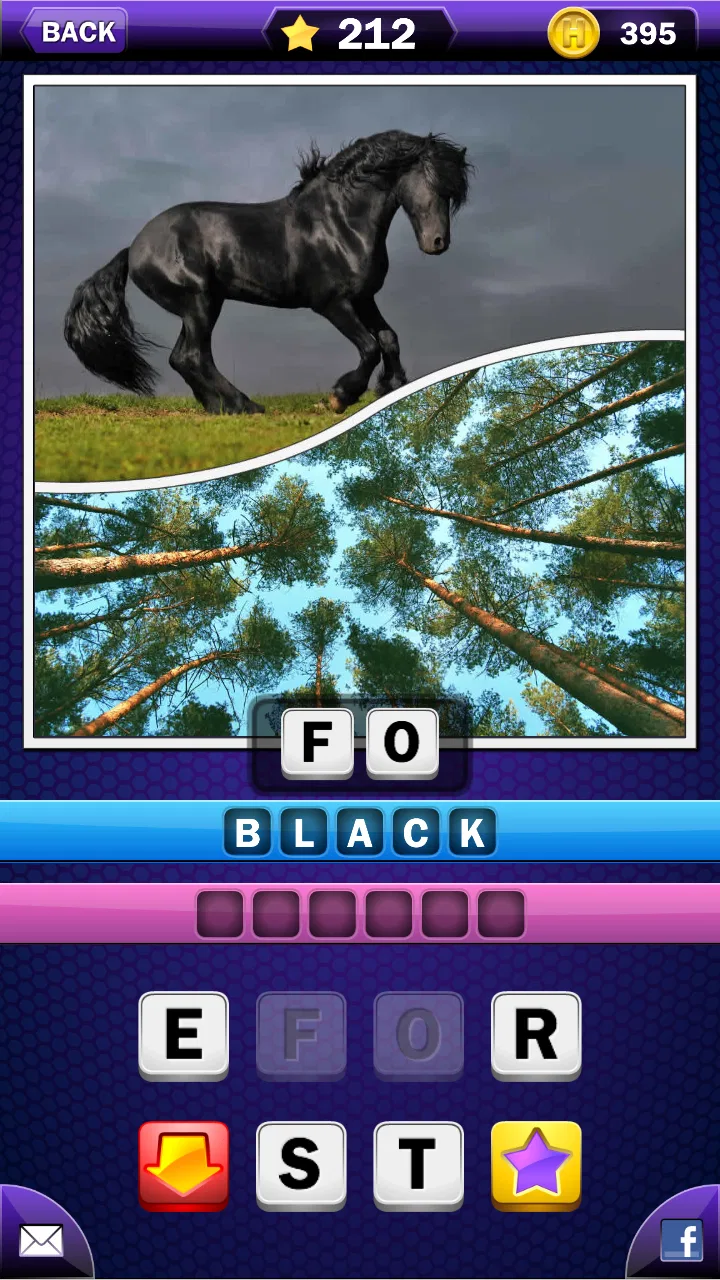
The basic workflow is pleasantly direct. I open a puzzle, read the wording carefully, and try to identify the relationship that links the two required words. The challenge is not usually about typing quickly. It is about noticing the intended association, resisting the first answer that comes to mind, and checking whether the wording supports it.
That makes the game easy to fit into ordinary moments. I can play while waiting for an appointment, during a coffee break, or at the end of the day when I want something more engaging than scrolling. A single puzzle can act as a small standalone activity, while a longer session works when I am in the mood to keep testing myself.
The strongest part of the routine is the low entry barrier. I do not need to remember a complicated board state or manage resources between turns. Each puzzle presents a focused language problem. If I have only a minute, I can attempt one clue. If I have more time, I can continue through several and gradually settle into the rhythm.
That same focus creates the first important trade-off. A game built around word relationships depends heavily on how naturally I understand the clue. Some answers feel satisfying because the connection becomes obvious only after a small mental shift. Others can feel less rewarding when several interpretations seem possible. I have learned not to treat an immediate wrong guess as a failure of vocabulary; sometimes the more useful move is to reread the clue and look for its intended level of meaning.
For a family setting, the Everyone rating is reassuring, and the format is approachable for different ages. Still, shared play works best when players explain why they chose an answer rather than simply calling out guesses. That turns the game into a small discussion about language, which is often more enjoyable than silently solving every puzzle alone.
What I check before settling into a session
Because the game is free, it is easy to install and try without making a purchase decision first. The store listing also shows a 4.6 average from around 5,100 ratings, along with roughly 1,800 written reviews. Those figures suggest that the basic concept has found a receptive audience, although they do not remove the need to decide whether this particular style of wordplay suits me.
I also keep the in-app purchase model in mind. Optional items are listed from $0.99 to $19.99 each. That range does not automatically make the game unsuitable, but it is a reason to be deliberate about tapping purchase-related controls, especially if I am handing the phone to a child. I treat the free version as the starting point and only consider spending if the additional help or content genuinely improves the way I want to play.
The version and operating-system requirements are practical details rather than reasons to upgrade a device. On a compatible phone, the important question is whether the interface feels comfortable for reading clues and entering answers. Word games are more tiring when text is cramped or when a player has to tap repeatedly to correct a simple mistake, so I prefer to test the first few puzzles with the phone held in the way I normally use it.
One habit that helps is separating the game’s settings from the puzzle-solving process. I check available options at the beginning of a session instead of interrupting a difficult clue later. I look for anything that affects sound, notifications, display, or assistance, then leave the configuration alone while solving. This creates a cleaner routine and prevents me from using a settings screen as an excuse to abandon a puzzle I simply need to think through.
I do not assume that every visible control is useful for every player. A hint can be valuable when I am genuinely stuck, but using help too early removes the most satisfying part of a word puzzle: the moment when the relationship finally becomes clear. My preferred rule is to give myself a quiet second attempt before seeking assistance. That small delay keeps the game feeling like a test of reasoning rather than a sequence of prompts to unlock.
Patterns that make solving quicker without making it automatic
Experienced play is less about memorizing answers and more about building a repeatable reading method. I first identify the obvious nouns, verbs, or descriptive words in the clue. Then I ask what kind of relationship the puzzle may be using: a shared phrase, a category, a contrast, a familiar expression, or a word that changes meaning depending on context.
This prevents me from locking onto the first association. If the clue seems to point toward a literal object, I also test whether it might be asking for an idiom. If a phrase appears too easy, I check whether the second word creates a different interpretation. The extra step is especially useful in a game where the answer often depends on seeing both words as a pair rather than treating them as separate vocabulary questions.
I also use a short reset when I stall. Instead of staring at the same wording, I say the clue aloud or rewrite its essential idea in my head. Hearing the language can expose a familiar phrase that silent reading hides. If that does not help, I move on and return later. The change of context is surprisingly effective because I am no longer forcing one interpretation.
Another useful habit is keeping a mental record of the kinds of connections that have already worked during the session. If several puzzles reward common expressions, I become more alert to that pattern. If the clues have required broader categories, I stop searching for an overly clever answer. This is not a shortcut built into the game; it is a player habit that makes each new puzzle easier to approach without making the solution predictable.
When playing with another person, I recommend asking for a reason before accepting an answer. “Why do those words belong together?” is a better prompt than “What is the answer?” It trains the same skill the game is testing and reveals whether a guess is based on a real connection or just a lucky association. It also makes the experience more social without requiring a separate multiplayer system.
For parents or teachers using the game informally, I would use it as a conversation starter rather than a formal lesson. After solving a clue, ask for another word that could fit the same relationship, or ask whether the connection would still work in a different sentence. This extends a short puzzle into vocabulary practice while keeping the activity playful.
Where the large puzzle collection helps and where it does not
The advertised collection of over 2,500 puzzles is a meaningful strength for anyone who dislikes seeing the same small set of challenges repeatedly. A broad library gives the game room to become part of a regular routine. I can return after a break and still expect the experience to have more ground to cover.
However, a large quantity does not guarantee that every clue will feel equally elegant. Word puzzles are personal: a connection that feels clever to one player can feel vague to another. I judge the game by the overall rhythm rather than expecting every individual puzzle to land perfectly. When a clue feels ambiguous, I give it a fair reread, but I do not pretend that all uncertainty is enjoyable.
This is also where the game differs from familiar alternatives in the word category. A crossword usually gives me a grid, crossing letters, and several intersecting deductions. A word-search game rewards visual scanning. A spelling challenge focuses on constructing or recognizing words under a clearer letter-based rule. Just 2 Words is more about semantic association. I am not filling a grid or hunting through a board; I am deciding how two ideas fit together.
That makes it a better choice for someone who enjoys language and interpretation than for someone who wants a strict, mechanical puzzle structure. If I prefer visible progress through a board, timed rounds, or a precise letter constraint, another word game may feel more dependable. If I like the uncertainty of asking “What connection is the creator aiming for?”, this format has more personality.
Limits that become clearer with advanced play
The game’s simplicity can become repetitive for players who need constant changes in format. The central two-word idea is focused, and that focus is exactly what makes it accessible. It is also the reason I would not recommend it as the only word game for someone who quickly tires of similar clue structures.
There is a second limitation in the balance between challenge and assistance. A hint may rescue a session, but too much reliance on help can turn the game into a process of narrowing choices rather than solving. I get the most value when I set a personal limit: attempt the clue independently, try a different interpretation, and only then consider assistance. Players who want unlimited guidance from the start may find the experience less rewarding, while players who refuse any help may become frustrated by a particularly slippery clue.
The purchase range also deserves practical attention. Since the game is free but includes items priced from $0.99 up to $19.99, I would review purchase controls before letting a child play unsupervised. For my own use, I see optional spending as something to keep separate from the core habit. The game should remain enjoyable when I solve at my own pace, not depend on buying my way through every difficult moment.
Device compatibility is another simple checkpoint. Android 6.0 or newer covers many phones, but anyone using an older device should verify compatibility before planning around the game. For supported phones, I would still avoid judging it after only one rushed puzzle. The value appears over repeated short sessions, when I can decide whether the clue style keeps my attention.
I would skip this game if I wanted a competitive ladder, a strong story, a visual adventure, or a word game based mainly on speed. I would also look elsewhere if I needed a highly structured educational tool with clearly graded lessons. Its strengths are narrower and more personal: quick access, language-based deduction, and a large supply of compact puzzles.
My method for getting more from each session
I get better results when I decide what kind of session I want before opening the game. For a short break, I solve one or two puzzles and stop even if I am tempted to continue. For a longer session, I keep a relaxed pace and accept that some clues will require a pause. This avoids turning a casual game into an unnecessary endurance test.
I also separate “I do not know” from “I have not tested enough interpretations.” That distinction matters. When I genuinely lack the vocabulary, a hint can be sensible. When I am merely attached to one reading of the clue, a hint is less useful than stepping back. This is one of the more important skills the game quietly encourages: noticing how I am thinking, not just whether I reached the answer.
Another advanced habit is using mistakes as a personal reference library. I remember the type of connection I missed, not necessarily the exact answer. Later, I am more careful with idioms, double meanings, and broad categories that I previously overlooked. This creates progress even when the game does not need a complicated progression system to keep me engaged.
For group play, I prefer taking turns explaining possible answers rather than racing. The format supports friendly debate because the interesting part is often the reasoning behind a connection. A quick family round can become a vocabulary conversation, while two friends can compare how differently they interpret the same clue. That social use is a genuine advantage over solitary letter-search games, even though the game itself remains a focused puzzle experience.
Players concerned about value should think in terms of frequency rather than the headline size of the collection. If I enjoy opening a word game several times a week, a large puzzle supply is useful. If I only play occasionally, I may not need to consider optional purchases at all. The free starting point makes that decision easier because I can establish a habit before spending anything.
My final view after settling into the format
Just 2 Words is strongest when I treat it as a thoughtful pocket puzzle, not as a full entertainment platform. Its two-word structure is easy to understand, but solving well requires attention to phrasing, context, and the difference between an obvious association and the intended one. That gives the game more depth than its short description might suggest.
The combination of a free entry point, an Everyone rating, and a substantial puzzle library makes it approachable for casual players, families, and anyone who likes language-based challenges. The current version is 6.2, and the game has built a visible audience, with more than 50,000 installs and a 4.6 average rating. Those are useful signs of reach, but my recommendation comes mainly from how well the format fits short, repeatable sessions.
I would recommend it to a friend who enjoys wordplay, likes solving through associations, and does not need a timer or a competitive ranking to stay interested. I would suggest using hints sparingly, checking the available settings before settling into a routine, and treating difficult clues as interpretation problems rather than immediate vocabulary tests.
I would not recommend it to someone who wants crosswords, an action game, or constant mechanical variety. For that player, a grid-based puzzle or a timed spelling game will probably offer clearer rules and a stronger sense of progression. But for quiet breaks, shared vocabulary discussions, and a steady supply of compact language challenges, this game earns a place on my phone. Just 2 Words succeeds because it keeps its idea focused while leaving enough room for the player’s own reasoning to make each solution feel earned.
FAQs for Just 2 Words
01What is Just 2 Words and how does the game work?
Just 2 Words is a casual word puzzle game built around solving clues with a two-word answer. Each puzzle gives you a short description, phrase, or hint, and you must identify the matching pair of words. The concept is easy to understand, but later challenges can require careful thinking, vocabulary knowledge, and attention to subtle meanings or word associations.
02Is Just 2 Words free to download and play?
Just 2 Words can generally be downloaded and played without an upfront purchase, although the exact availability of free content may depend on the version and platform. Like many mobile puzzle games, it may include advertisements, optional in-app purchases, or other features that support continued development. It is worth checking the store listing before downloading if you want to understand the current pricing and purchase options.
03Can I play Just 2 Words offline?
Many of the core puzzles in Just 2 Words may be available without a constant internet connection once the game has been installed, which makes it convenient for travel or short breaks. However, online access can still be required for advertisements, updates, cloud features, leaderboards, or restoring purchases. For the most reliable experience, open the game online at least once after installation and review its current requirements.
04Is Just 2 Words suitable for children and beginners?
The basic gameplay is simple enough for beginners, and the short two-word format makes Just 2 Words approachable for casual players. However, difficulty can vary because some clues depend on vocabulary, idioms, general knowledge, or interpreting words in an unexpected way. Parents should also review the app’s age rating, advertising, and in-app purchase settings before allowing younger children to play.
05Does Just 2 Words offer hints or help when I get stuck?
Just 2 Words is designed to encourage players to think through each clue, but puzzle games of this type commonly provide some form of assistance, such as hints, revealed letters, or the option to skip a difficult challenge. These features may be limited by an in-game currency, advertisements, or purchase options. If you prefer a completely challenge-focused experience, you can simply avoid using help until it is necessary.
Pros
- Simple word puzzles are easy to learn and play anywhere.
- Short rounds make it ideal for quick breaks.
- The two-word format encourages creative thinking.
- Clean interface keeps the focus on solving puzzles.
- Suitable for players who enjoy casual vocabulary games.
Cons
- Some puzzles may feel too easy for experienced word-game fans.
- Limited gameplay variety can reduce long-term engagement.
- Hints or extra assistance may be restricted or costly.
- Progress can become repetitive after extended play sessions.
- Requires a solid English vocabulary to solve many clues.

Just 2 Words
Gallery